


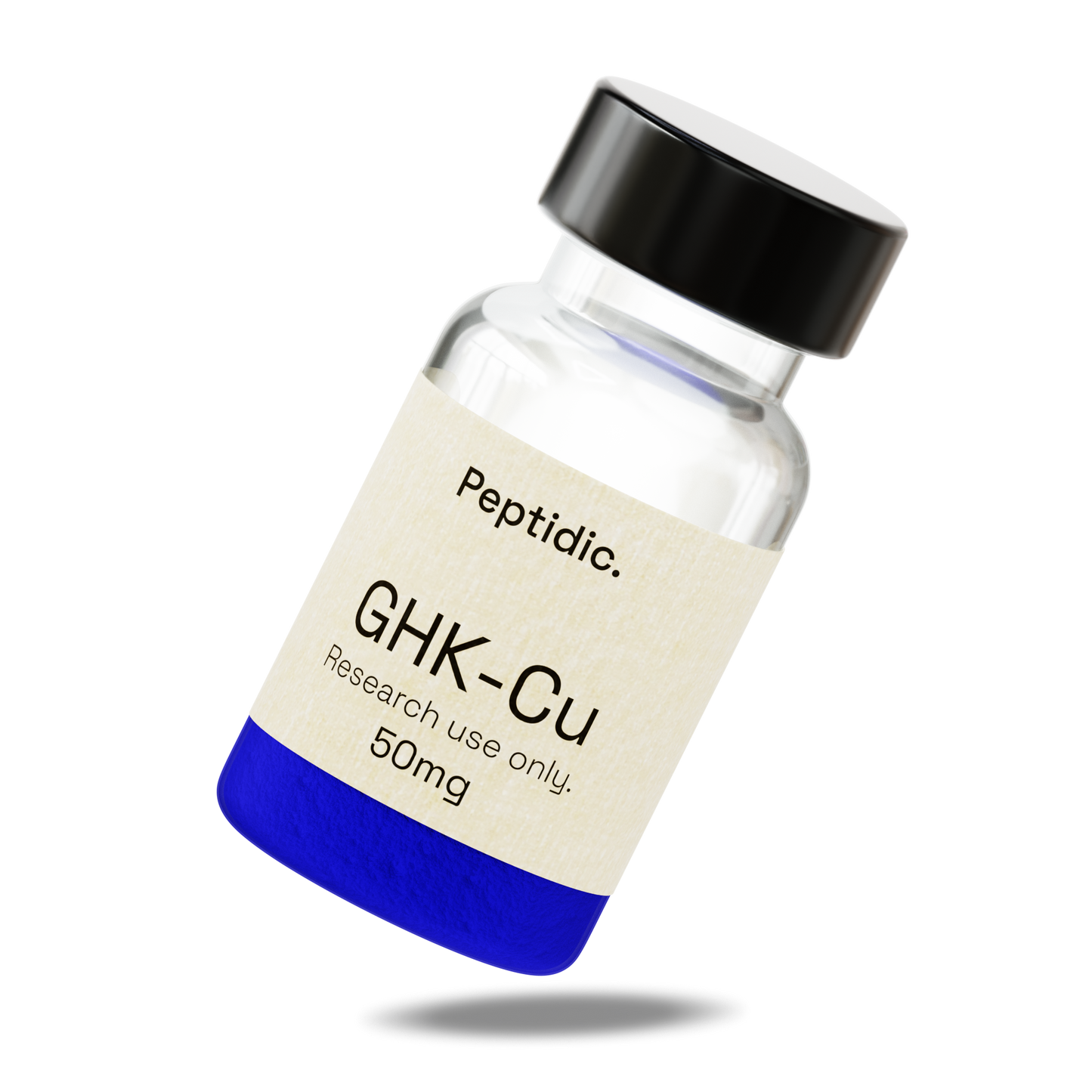
Need reconstitution solution? Don't forget to add Bacteriostatic Water — available as a quick add in your cart before checkout.
Copper Tripeptide Complex
Nature's Signal for Tissue Repair and Regeneration
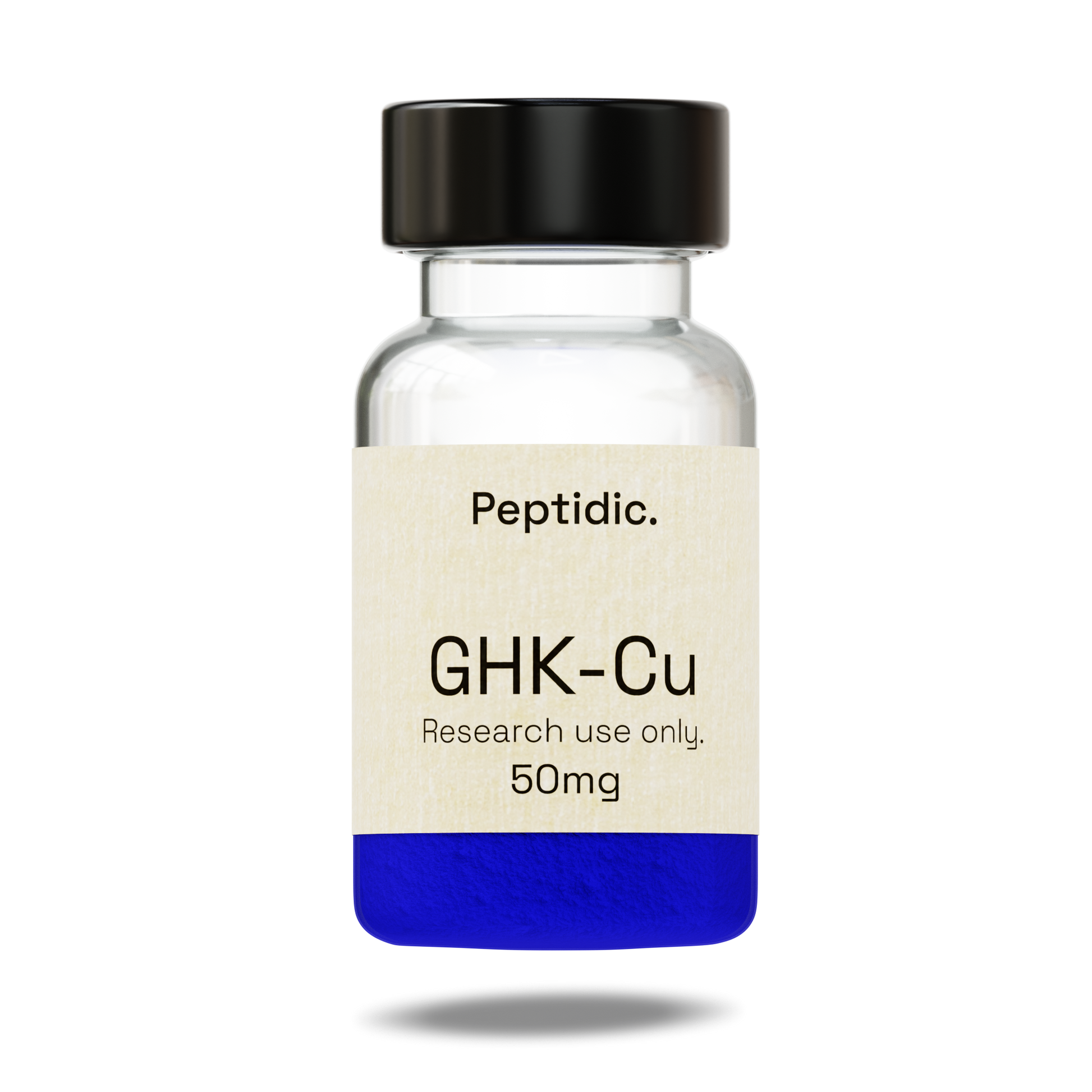
GHK-Cu is a naturally occurring copper-binding tripeptide found in human blood plasma, saliva, and urine. First isolated in 1973, this small but powerful molecule acts as the body's endogenous repair signal — triggering collagen synthesis, fibroblast activation, and angiogenesis. Research shows GHK-Cu levels decline significantly with age, making it a compelling target for regenerative research.
- Naturally occurring copper peptide complex
- Stimulates collagen and glycosaminoglycan synthesis
- Activates fibroblasts and promotes angiogenesis
- Potent antioxidant properties
- Declines with age — from ~200 ng/mL to ~80 ng/mL
For laboratory research use only. Not for human consumption.

Multi-Pathway Regeneration
How GHK-Cu Orchestrates Tissue Remodeling
GHK-Cu functions as both a copper chaperone and a pro-repair signal. It delivers copper to cuproenzymes like lysyl oxidase (critical for collagen cross-linking) while simultaneously modulating over 4,000 genes involved in tissue repair. The result: chemoattraction of repair cells, increased collagen and elastin synthesis, and suppressed inflammatory signaling.
- Delivers copper to lysyl oxidase for collagen cross-linking
- Modulates 4,000+ genes related to tissue repair
- Chemoattracts macrophages, mast cells, and capillary cells
- Increases VEGF, FGF-2, and nerve growth factor expression
- Suppresses TGF-β1 and TNF-α inflammatory signaling
For laboratory research use only. Not for human consumption.

Research Applications
From Wound Healing to Skin Rejuvenation Research
GHK-Cu has been extensively studied for its role in wound healing and tissue regeneration. In the rat wound chamber model, GHK-Cu produces concentration-dependent increases in collagen synthesis (up to 9-fold in healthy rats), DNA content, and glycosaminoglycan accumulation. Human clinical data supports its use in chronic wound care and post-procedure healing.
- Wound healing and chronic ulcer research
- Skin rejuvenation and anti-aging studies
- Post-procedure tissue recovery modeling
- Hair follicle and dermal papilla research
- Connective tissue and scar formation studies
- Neuroprotective pathway exploration
For laboratory research use only. Not for human consumption.

The Science Behind Copper Peptide: Why GHK-Cu Is Central to Regenerative Research
GHK-Cu (glycyl-L-histidyl-L-lysine:copper complex) represents one of the most extensively studied peptides in regenerative biology. First isolated from human plasma in 1973, this naturally occurring tripeptide has since been shown to influence thousands of genes involved in tissue repair, inflammation control, and matrix remodeling.
What makes GHK-Cu remarkable is its dual function. As a copper chaperone, it safely delivers copper to enzymes essential for collagen and elastin cross-linking (like lysyl oxidase and SOD1). As a signaling molecule, it triggers pro-repair gene programs — stimulating collagen synthesis, glycosaminoglycan production, and decorin expression while activating matrix metalloproteinases for tissue remodeling.
In vivo wound chamber studies demonstrate GHK-Cu's potency: concentration-dependent increases in dry weight, DNA, total protein, collagen (9-fold in healthy rats), and glycosaminoglycan content. The peptide increases Type I and Type III collagen mRNA expression and elevates dermatan sulfate production. Human clinical data supports GHK-Cu in wound healing (including diabetic ulcer studies) and post-procedure recovery (laser resurfacing trials).
For research teams investigating tissue regeneration, wound healing, or age-related decline, GHK-Cu provides a well-characterized, multi-pathway tool with decades of scientific literature supporting its biological activity. In plasma, levels drop from approximately 200 ng/mL in young adults to just 80 ng/mL by age 60 — coinciding with declining regenerative capacity.
For research use only. Not for human consumption.
Scientific References
- Maquart FX, et al. In vivo stimulation of connective tissue accumulation by the tripeptide-copper complex glycyl-L-histidyl-L-lysine-Cu2+ in rat experimental wounds. J Clin Invest. 1993;92(5):2368-2376.
- Pickart L. The human tri-peptide GHK and tissue remodeling. J Biomater Sci Polym Ed. 2008;19(8):969-988.
- Pickart L, et al. The human tripeptide GHK-Cu in prevention of oxidative stress and degenerative conditions of aging: implications for cognitive health. Oxid Med Cell Longev. 2012;2012:324832.
- Pickart L, et al. GHK Peptide as a Natural Modulator of Multiple Cellular Pathways in Skin Regeneration. Biomed Res Int. 2015;2015:648108.
- Pickart L, Margolina A. Regenerative and Protective Actions of the GHK-Cu Peptide in the Light of the New Gene Data. Int J Mol Sci. 2018;19(7):1987.

CERTIFICATE
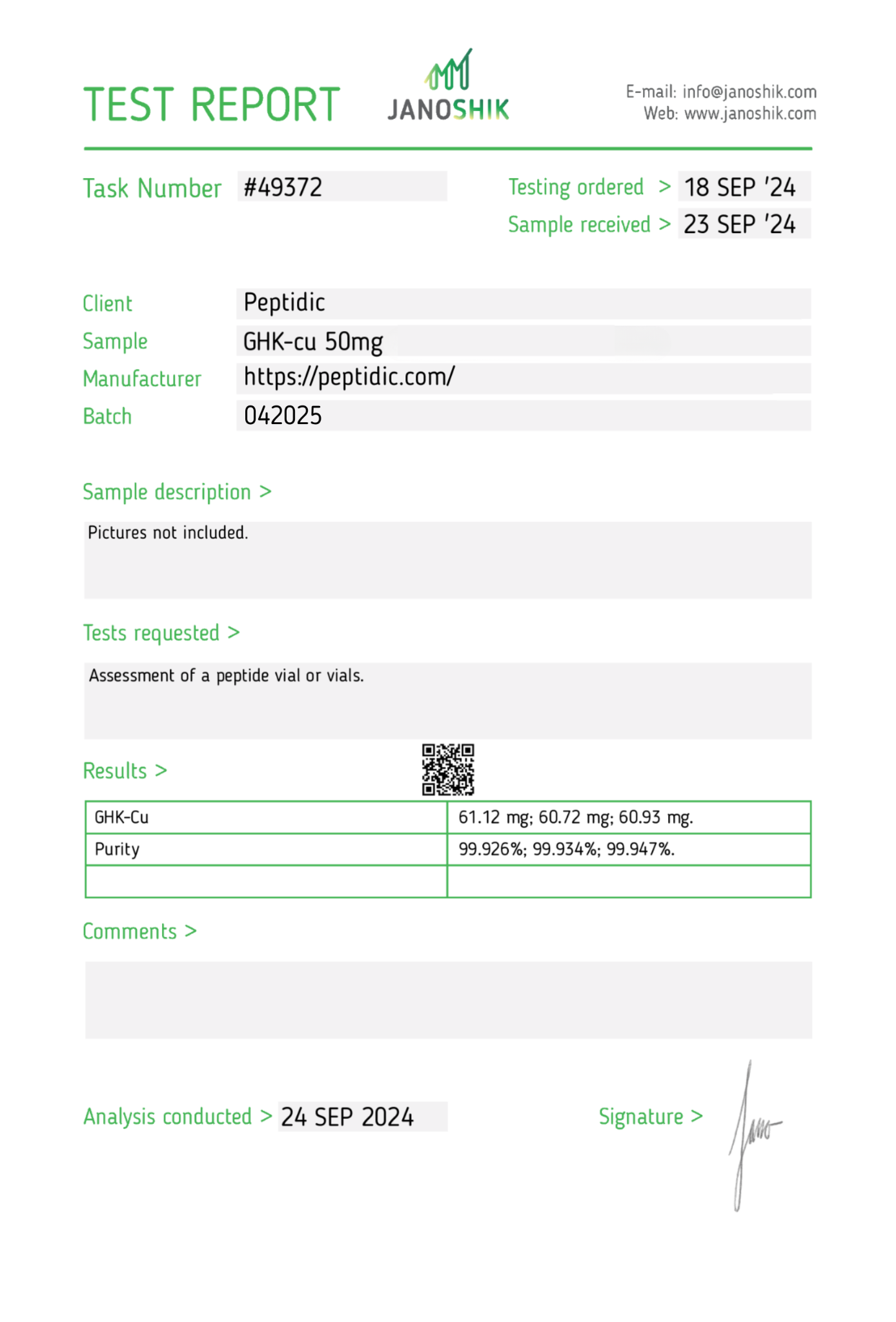
A detailed summary of the analytical profile, purity, and molecular integrity of the research-grade peptide compound.
Each vial contains a highly purified lyophilized peptide, produced under sterile laboratory conditions and tested for >99% purity via HPLC and mass spectrometry.
Formulated without additives or fillers, our peptides are ideal for cutting-edge scientific research in areas such as cellular mechanisms, tissue regeneration, and metabolic modulation.
For research use only. Not intended for human or veterinary use.
Each batch undergoes rigorous third-party testing to ensure molecular accuracy, sterility, and stability. Our commitment to scientific precision guarantees that every vial reflects the highest standards of quality control and consistency, making them ideal for reproducible and reliable research outcomes.
DIRECTIONS

All peptides are supplied in lyophilized powder form for research use only. Not intended for human or veterinary use.
Use Bacteriostatic Water (0.9%).
Slowly inject the liquid along the inner wall of the vial using a sterile syringe.
Do not shake. Swirl gently until the powder dissolves completely.
Recommended volume depends on your lab protocol (commonly 1–2 mL).
- : Keep lyophilized peptide at 36–46°F, or frozen (-4°F) for long-term stability.
- : Store in the refrigerator (36–46°F) and use within 10 to 30 days, depending on the peptide.
These compounds are intended for Research Use Only.
Always wear gloves and sterile lab gear.
Avoid contamination. Use clean tools and surfaces.
Dispose of all biological materials, including syringes and empty vials, according to your local laboratory safety regulations.
COMPOSITION
An overview of the research characteristics and integrity of the peptide compound.
Each vial contains a highly purified lyophilized peptide, produced under sterile laboratory conditions and tested for >99% purity via HPLC and mass spectrometry.
Formulated without additives or fillers, our peptides are ideal for cutting-edge scientific research in areas such as cellular mechanisms, tissue regeneration, and metabolic modulation.
For research use only. Not intended for human or veterinary use.
Each batch undergoes rigorous third-party testing to ensure molecular accuracy, sterility, and stability. Our commitment to scientific precision guarantees that every vial reflects the highest standards of quality control and consistency, making them ideal for reproducible and reliable research outcomes.
Peptides are shipped as lyophilized powder to ensure maximum stability. Upon arrival, store at -4°F in a dry, dark environment. Once reconstituted, use promptly or refrigerate at 36–46°F for short-term stability. Proper storage preserves biological integrity and ensures reliable research performance over time.
- Company
- Price
- Purity
- Quantity
- Shipping
-
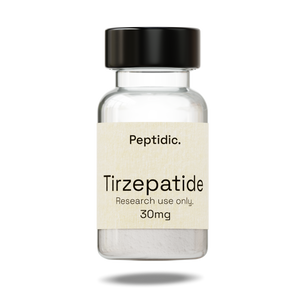
Tirzepatide – 30mg
-
Peptidic.Peptide Sciences
-
$108.00$275.00
- ≥99.784%98–99.3%
- 30 mg15 mg
- Free 2-Day Shipping3-10 Business Day
-

